Effective plastic waste management requires a combination of mechanical recycling, advanced chemical processing, biological treatment, and municipal source-segregation to prevent environmental leakage.
Plastic supports almost every part of modern life. It protects food, keeps medicines safe, reduces product weight, and helps goods move efficiently through supply chains. Its durability makes it useful during use, but that same quality creates a serious challenge after disposal. Plastic waste does not disappear when the collection vehicle drives away. It enters a hidden journey shaped by product design, contamination, sorting quality, infrastructure, and available technology. What happens next depends on what the plastic contains, how it has been used, what other materials are attached to it, and which treatment systems are available. This is why plastic waste management methods and solutions cannot depend on one bin, one sorting process, or one technology. Better Ceasons focuses on the conversion of plastic streams that often remain difficult to manage after collection and sorting. By studying the material and applying controlled conversion technology, Better Ceasons creates a practical pathway for turning suitable plastic waste into fuel.
Why Plastic Waste Is Difficult to Manage
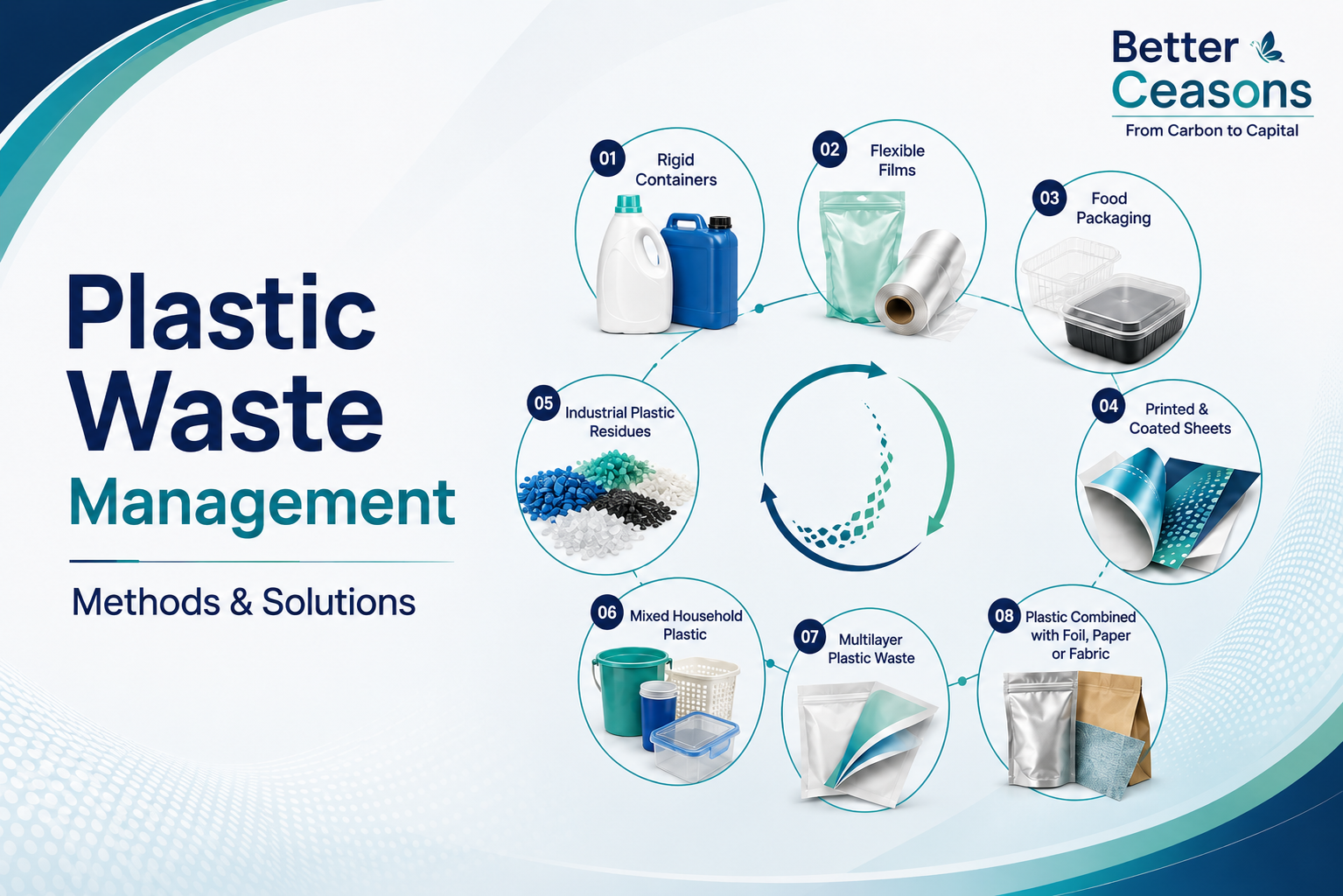
Plastic waste is often discussed as though it were one single material. In reality, plastic waste can include many different polymers, formats, coatings, combinations, and contamination levels. It may include:- Rigid containers
- Flexible films
- Food packaging
- Printed and coated sheets
- Industrial plastic residues
- Mixed household plastic
- Multilayer plastic waste
What Happens to Plastic After Collection?
Collection is only the beginning of the plastic waste journey. After collection, plastic may first reach a transfer station where material from several collection vehicles is combined before being transported in larger quantities. From there, it may move to a sorting facility. Sorting facilities can use conveyor systems, rotating screens, optical scanners, air separation, density separation, and manual inspection to separate plastic from glass, metal, organic material, paper, and other waste streams. These systems play an important role, but they also have practical limitations. An optical scanner may identify the visible surface of a package without fully understanding the different layers bonded inside it. Food stained plastic may be rejected. Small plastic fragments may remain mixed with other materials. Flexible packaging can fold, overlap, or become trapped in equipment. Collection moves plastic from one location to another. Sorting organises it into more useful categories. Neither step automatically guarantees that the material has reached an appropriate final treatment pathway.Why Sorting Alone Is Not Enough
Separating broad material categories can improve the quality of collected plastic. Keeping organic residue away from dry material can also reduce contamination and make further treatment easier. But sorting does not solve every waste segregation problem. Even after plastic has been separated, important questions remain.Which facility can actually accept the material?
Can the facility manage its contamination level?
Is enough material available to justify transportation and processing?
What happens to mixed or multilayer packaging?
Can the resulting output be used practically?
How will remaining residues be managed?
Is suitable treatment infrastructure available nearby?
A separated plastic stream can still contain several polymers, labels, inks, adhesives, coatings, and food residue. A processing facility may accept one plastic category while rejecting another. Some regions may have collection and segregation infrastructure but limited capacity for handling difficult plastic streams. This is why waste segregation alone is not enough when mixed, contaminated, or multilayer plastic still requires a practical destination. Sorting remains important, but every sorted material stream needs a technically suitable next step.Why Multilayer Plastic Is a Major Challenge
Multilayer packaging is designed to perform several functions at the same time. One layer may provide structural strength. Another may prevent moisture from entering. A metallic layer may protect food from oxygen or light. Adhesives keep different layers bonded together, while printing inks and coatings provide branding, protection, and product information. This creates highly effective packaging during use. After disposal, however, the same structure becomes difficult to process. Multilayer plastic waste may contain:- Several plastic types
- Aluminium foil
- Paper
- Adhesives
- Printing inks
- Protective coatings
- Food contamination
- Main Plastic Waste Management Methods
- 1. Reducing Unnecessary Plastic
- 2. Extending Product Life
- 3. Physical Plastic Processing
- 4. Chemical Conversion
Which plastic types can the process accept?
How much contamination can it tolerate?
What preparation does the feedstock require?
What gases or residues are generated?
What output quality can be achieved?
Is there a practical use or destination for the output?
A waste treatment process is not complete simply because the original plastic is no longer visible. The complete pathway from input to output matters.- 5. Controlled Thermal Conversion
- A Different Path for Difficult Plastic Waste
Why Mixed Waste Treatment Requires Preparation
Real world plastic waste rarely arrives as a clean and uniform material. It may be collected alongside food residue, paper, fabric, glass, metals, soil, organic matter, or other unwanted materials. This is one reason mixed waste treatment can be challenging. Before conversion or processing, facilities may need to remove unsuitable objects, separate metals and glass, reduce excessive moisture, remove high levels of organic contamination, and prepare a more consistent feedstock. Preparation directly affects process performance. High moisture can reduce efficiency. Metal and glass may interfere with or damage equipment. Organic material can influence process behaviour and output quality. Unknown substances can introduce operational and safety concerns. Treatment facilities therefore need to be designed around realistic waste conditions rather than ideal laboratory samples. Understanding what enters the system is just as important as selecting the technology itself.- Choosing the Right Pathway for Plastic Waste
- Material composition
- Polymer type
- Contamination level
- Moisture content
- Product format
- Presence of coatings or bonded materials
- Local infrastructure
- Technology compatibility
- Output quality
- Practical end use
- The Real Solution Is Not One Bin or One Machine
- “Which one method can solve all plastic waste?”
- Conclusion
- Frequently Asked Questions
What are the main plastic waste management methods?
The main plastic waste management methods include reducing unnecessary plastic, extending product life, separating suitable material streams, physical processing, chemical conversion, controlled thermal conversion, and responsible residue management. The right method depends on the material type, contamination level, product structure, available infrastructure, and intended output.Why is sorting alone not enough for plastic waste management?
Sorting separates plastic into broader material categories, but it does not guarantee that every plastic stream has a suitable treatment destination. Mixed, contaminated, flexible, coated, and multilayer plastics may still require specialized preparation or processing after separation.Why is multilayer plastic waste difficult to manage?
Multilayer packaging can combine several plastics with foil, paper, adhesives, printing inks, and protective coatings. These materials are often tightly bonded together, making physical separation difficult and limiting the treatment methods that can process them effectively.How does pyrolysis technology process plastic waste?
Pyrolysis uses controlled heat in the absence of oxygen to break suitable plastic materials into fuel related outputs, gases, and other components. The process requires appropriate feedstock preparation, controlled operating conditions, gas management, monitoring, and responsible handling of outputs and residues.What is mixed waste treatment?
Mixed waste treatment involves preparing waste streams that contain plastic alongside food residue, paper, fabric, glass, metal, organic matter, or other materials. Preparation may include removing unsuitable materials, reducing moisture, separating metals and glass, and creating a more consistent feedstock before processing.Which plastic materials are harder to process?
Flexible films, contaminated food packaging, mixed household plastic, multilayer plastic, coated sheets, and plastic combined with foil, paper, adhesives, or fabric can be more difficult to process than relatively clean single material rigid plastics. Their suitability ultimately depends on the processing technology and required feedstock conditions.How to Choose the Right Plastic Waste Management Method
A practical process for understanding plastic waste, preparing the material, and selecting a technically suitable management pathway.
Identify the plastic material
Determine the polymer type, product format, material composition, coatings, bonded layers, additives, and other components present in the plastic waste.
Identify the input material composition
Determine polymer types, moisture content, and presence of multilayer foils or additives.
Assess contamination levels
Check for food residue, organic material, or non-plastic debris that affects processing suitability.
Select suitable conversion pathway
Match material properties with physical recycling, chemical recycling, or pyrolysis thermal conversion.
Establish end-use output destinations
Ensure recovered fuels, oils, or feedstocks meet industrial quality standards for circular applications.
Key Questions Answered
What Happens to Plastic After Collection?↓
Collection is only the beginning of the plastic waste journey.
Is suitable treatment infrastructure available nearby?↓
A separated plastic stream can still contain several polymers, labels, inks, adhesives, coatings, and food residue.
Is there a practical use or destination for the output?↓
A waste treatment process is not complete simply because the original plastic is no longer visible.
What are the main plastic waste management methods?↓
The main plastic waste management methods include reducing unnecessary plastic, extending product life, separating suitable material streams, physical processing, chemical conversion, controlled thermal conversion, and responsible residue manageme...
Why is sorting alone not enough for plastic waste management?↓
Sorting separates plastic into broader material categories, but it does not guarantee that every plastic stream has a suitable treatment destination. Mixed, contaminated, flexible, coated, and multilayer plastics may still require specialized prep...
Why is multilayer plastic waste difficult to manage?↓
Multilayer packaging can combine several plastics with foil, paper, adhesives, printing inks, and protective coatings. These materials are often tightly bonded together, making physical separation difficult and limiting the treatment methods that ...
How does pyrolysis technology process plastic waste?↓
Pyrolysis uses controlled heat in the absence of oxygen to break suitable plastic materials into fuel related outputs, gases, and other components. The process requires appropriate feedstock preparation, controlled operating conditions, gas manage...
What is mixed waste treatment?↓
Mixed waste treatment involves preparing waste streams that contain plastic alongside food residue, paper, fabric, glass, metal, organic matter, or other materials. Preparation may include removing unsuitable materials, reducing moisture, separati...
Which plastic materials are harder to process?↓
Flexible films, contaminated food packaging, mixed household plastic, multilayer plastic, coated sheets, and plastic combined with foil, paper, adhesives, or fabric can be more difficult to process than relatively clean single material rigid plast...
Written by Team Better Seasons
Circular Economy Editorial Board
Better Ceasons is a clean-technology enterprise transforming municipal solid waste streams into high-value carbon resources and renewable energy.
Deploy Carbon-Responsible Clean Tech
Better Ceasons partners with municipal leaders and industrial partners to convert organic and plastic waste into valuable low-carbon resources.
Connect With Our Engineering Board